
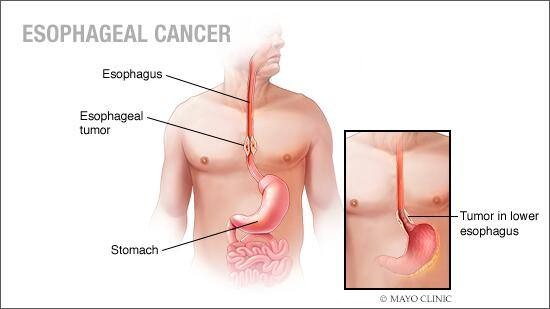
DEAR MAYO CLINIC: I was recently diagnosed with esophageal cancer, and I was told I may need surgery. How do doctors determine whether surgery is the right option? Are there newer, less invasive approaches available?
ANSWER: Treatment for esophageal cancer has evolved significantly in recent years, and surgery remains one of the most important tools for treating this disease. For many patients, it is one part of a larger, carefully planned treatment approach. Determining whether surgery is appropriate and when it should occur depends on the stage of the cancer and other individual factors.
Cancer stage
One of the most important considerations is the stage of the cancer, which describes how deeply the tumor has grown into the esophagus and whether it has spread elsewhere in the body. If cancer has spread to distant organs, known as metastatic disease, surgery typically isn't recommended. Instead, treatment may focus on systemic therapies, such as chemotherapy, immunotherapy or a combination of both.
For people whose cancer is still localized or regionally advanced, surgery is often considered as part of the broader treatment plan. However, it's uncommon for surgery to be the first step. Esophageal cancer frequently doesn't cause symptoms until it has progressed, so many people are diagnosed at a stage when additional therapy is needed before surgery. This is called neoadjuvant therapy, and it may include chemotherapy, radiation therapy, immunotherapy or a combination of these treatments. The goal is to shrink the tumor, improve the chances of complete surgical removal and address any microscopic cancer cells that may have spread.
In contrast, very early-stage esophageal cancers, often found during endoscopy for another condition such as chronic acid reflux or Barrett's esophagus, may be treated endoscopically. In select cases, physicians can remove these superficial tumors using endoscopic techniques, which are performed through the mouth without external incisions. These approaches can be highly effective when the cancer is confined to the innermost layers of the esophagus.
Surgery
When surgery is recommended, the procedure most commonly performed is an esophagectomy, which involves removing part or most of the esophagus and reconstructing it using the stomach.
In recent years, there have been important advances in how this surgery is performed. Traditionally, esophagectomy required large incisions in the chest and abdomen. Today, many patients may be candidates for minimally invasive approaches, including laparoscopic and robotic-assisted surgery. These techniques use smaller incisions and specialized instruments, allowing surgeons to perform the same operation with less trauma to the body. These approaches are designed not only to treat the cancer effectively but also to support recovery and reduce the physical effects of surgery.
Minimally invasive surgery can offer several potential benefits, including reduced pain, shorter hospital stays and faster recovery times. Not everyone is a candidate for these approaches, but they're increasingly used when appropriate and when performed by experienced surgical teams.
Even with these advances, esophageal surgery is a major, complex procedure, and it's important to understand how it may affect daily life afterward. Because the stomach is reshaped into a narrow tube to replace the esophagus, patients often need to adjust how and what they eat. Smaller, more frequent meals are usually necessary, and some people may experience symptoms such as reflux, dumping syndrome or a sensation that food moves more slowly. These changes can be significant, but many patients adapt over time with guidance from their care team.
Researchers are continuing to study whether some patients who respond well to chemotherapy and radiation may be able to delay or avoid surgery. However, current imaging tools for esophageal cancer can't always detect small amounts of remaining cancer. For that reason, surgery is still commonly recommended when a patient is a good candidate, even if scans show a strong response to treatment.
Multidisciplinary team approach
Because esophageal cancer care often involves multiple therapies, treatment planning typically includes input from several specialists. Reviewing all available information, including tumor stage, response to therapy and overall health, helps guide a plan that balances effectiveness with the potential effects on daily life.
Given the complexity of esophageal cancer and the surgery used to treat it, patients may benefit from care at centers that have extensive experience with this disease and a coordinated, multidisciplinary team. This approach can help ensure that treatment decisions are carefully considered and that patients are supported throughout each phase of care.
Carlos Puig Gilbert, M.D., Thoracic Surgery, Mayo Clinic, Rochester, Minnesota